


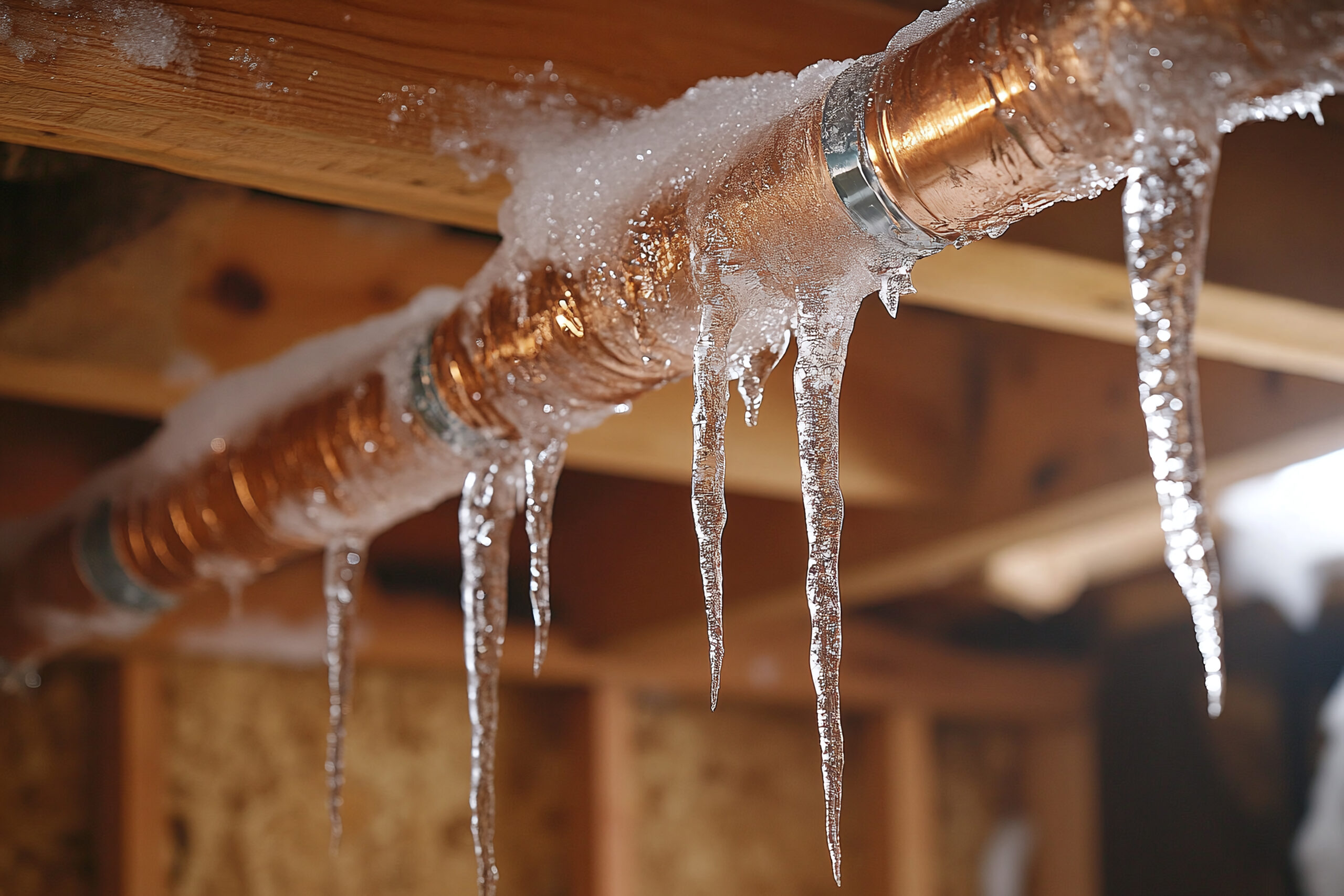
First Freeze Home Preparation
The first cold snap of the year often sneaks up faster than we expect, especially in places like McCall, Boise, Post Falls, and Spokane, where temperature swings can happen overnight. When that first freeze hits, unprepared homes can face burst pipes, frozen hoses, ice buildup, and water damage that can cost thousands to repair.
Here’s how to stay one step ahead of the cold with first freeze home preparation and what to do if freezing temps cause unexpected damage.
The Chilling Stats
- Water damage and freezing = 28% of homeowners insurance claims
- Average claim cost = $14,000
- A single 1/8in pipe can release 250 gallons/day
Why Early Freeze Prep Matters
Q: Why can one night of freezing temps cause so much damage?
When water freezes, it expands and even a small amount trapped inside pipes, sprinkler lines, or gutters can create enough pressure to burst materials. The damage isn’t always immediate, leaks may appear days later as things thaw. That’s why preparation is key before the first freeze warning hits.
Your First Freeze Checklist
Q: What should homeowners and property managers do before the first freeze?
- Seal foundation vents and drafts to limit the amount of cold air exposure to your homes plumbing.
- Disconnect hoses and drain outdoor spigots to prevent ice expansion inside pipes.
- Insulate exposed plumbing in garages, crawl spaces, and exterior walls.
- Keep home temps above 55 degrees even when vacant to prevent pipe freezing.
- Check and clean gutters so melting snow can drain properly and not refreeze at the eaves.
- Seal gaps and cracks around doors, windows, and foundations to reduce heat loss.
- Open sink cabinets to circulate warm air from the interior of your home into areas where plumbing is.
- Service your heating system and inspect chimneys or vents for blockages.
- Locate your main water shut-off valve in case of an emergency.
The Hidden Hero: The Shut-Off Valve
Find it before winter hits. Usually by the water meter, in the basement, or along an exterior wall. Make sure it’s accessible because shutting off water immediately can mean the difference between a puddle and a five figure insurance claim.
What to Do If Pipes Freeze or Burst?
Q: How do you know if a pipe is frozen?
You might notice little to no water flow from faucets, frost on visible pipes, or bulging sections of plumbing.
If a pipe bursts or you discover water damage:
-
Turn off your water immediately.
-
Shut off electricity in affected areas if water is near outlets or wiring.
-
Call a certified restoration team like Disaster Response. Our 24/7 team can extract water, dry structures, and prevent mold from forming.
-
Do NOT chip away at it: This can damage shingles and roofing materials.
-
Use calcium chloride: Avoid rock salt (it damages shingles and plants).
-
Call a professional: Roof and water mitigation experts can remove dams safely and prevent further damage.
How Disaster Response Can Help
From emergency mitigation to full rebuilds, Disaster Response helps homeowners, HOAs, and property managers recover quickly from winter damage.
We handle:
-
Roof and insulation repair
-
Plumbing and property restoration
-
Insurance coordination. We work directly with your carrier to simplify the process
📞 Available 24/7 — when disaster strikes, we’re ready.